
Ancient Capitals
Xi’an Travel Guide
Xi’an is one of the best cities for understanding ancient China. If Beijing shows you imperial power, Xi’an shows you the deep roots of Chinese civilization.
As a guide, I would introduce Xi’an not only as the home of the Terracotta Warriors, but as a city of ancient capitals, city walls, Silk Road history, noodles, Muslim Quarter food, and Tang-style cultural imagination.
How to understand Xi’an
Xi’an is one of China’s great ancient capitals. It was known as Chang’an in ancient times and served as a capital for several important dynasties. It was also connected with the beginning of the Silk Road.
Chang’an and Chinese civilization
Xi’an helps visitors understand the early strength and imagination of Chinese civilization. Ancient Chang’an was once one of the most important cities in the world.
A gateway to the west
Xi’an was historically linked with the Silk Road. This gives the city a strong sense of cultural exchange, trade, religion, and movement between China and the wider world.
Food, streets, and old-city rhythm
Xi’an is not only historical. It is also a very lively city, famous for noodles, street food, night markets, Muslim Quarter snacks, and the feeling of everyday life inside the old city walls.
What Xi’an feels like for first-time visitors
Many first-time visitors feel that Xi’an is more grounded and ancient than many modern Chinese cities. It has a slower rhythm, a strong historical atmosphere, and very distinctive local food.
Ancient and earthy
Xi’an feels different from Beijing’s grand political atmosphere or Shanghai’s international energy. It feels older, warmer, and closer to the soil of northern China.
History beside street food
In Xi’an, huge historical sites and everyday food streets exist close together. You may visit a world-famous archaeological site in the morning and eat handmade noodles in a small local restaurant at night.
Places I would introduce first
For a first trip to Xi’an, I would choose places that show different layers of the city: imperial history, archaeological wonder, city-wall life, religious exchange, and local food culture.
 Must-see
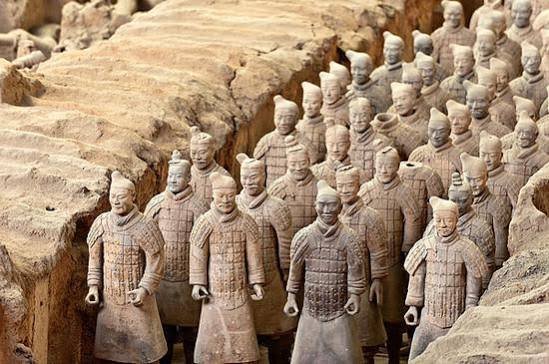
Terracotta Warriors
The Terracotta Warriors, or 兵马俑 bīngmǎyǒng, are connected with the First Emperor of Qin.
Do not only look at the number of figures. Notice the faces, hairstyles, armor, positions, and the scale of the burial project. It shows both power and fear of the afterlife.
 Old city
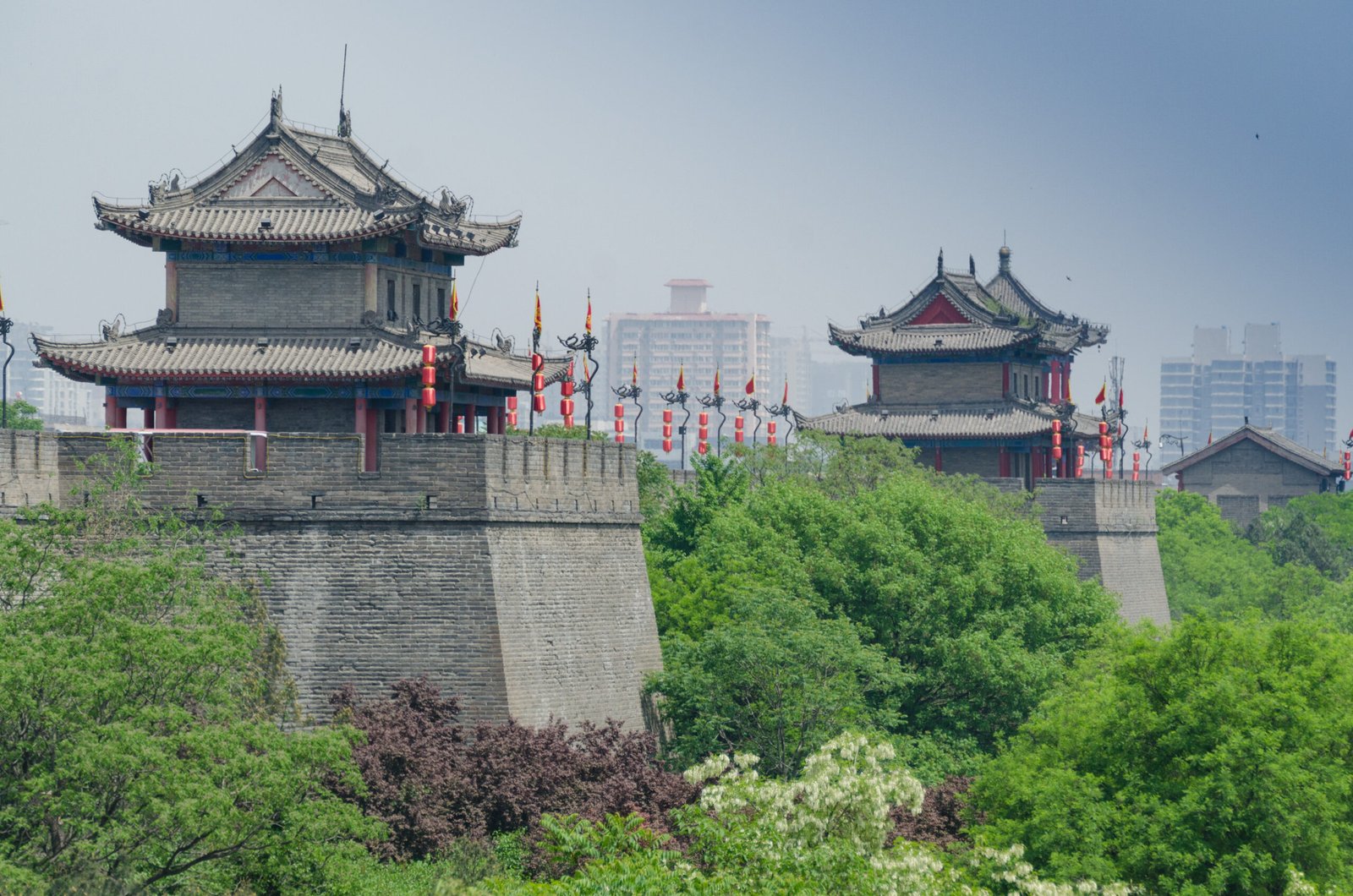
Xi’an City Wall
The city wall, or 城墙 chéngqiáng, is one of the best places to feel the shape of the old city.
Walking or cycling on the wall gives you a clear view of how the old and new city meet.
 Landmark
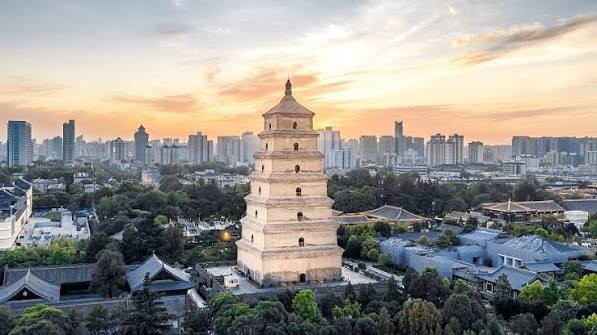
Big Wild Goose Pagoda
The Big Wild Goose Pagoda, or 大雁塔 Dàyàntǎ, is connected with Buddhism, translation, and cultural exchange.
It helps visitors understand how religion and knowledge moved along ancient routes.
 Food
Food
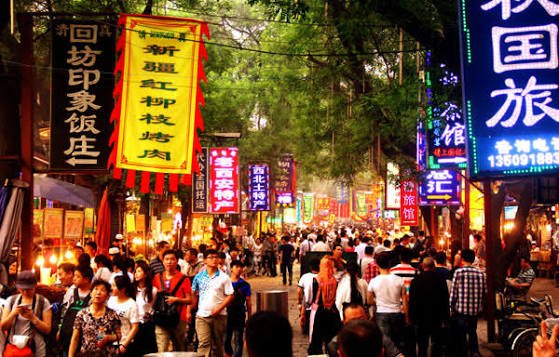
Muslim Quarter
The Muslim Quarter is famous for snacks, night food, and the Hui Muslim community.
It shows another side of Xi’an: trade, religion, food, and cultural diversity.
 Square
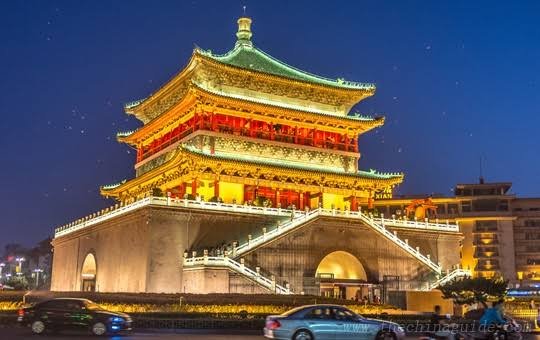
Bell Tower and Drum Tower
The Bell Tower and Drum Tower stand near the center of the old city.
They are useful landmarks for understanding Xi’an’s old urban layout and evening atmosphere.
 Museum
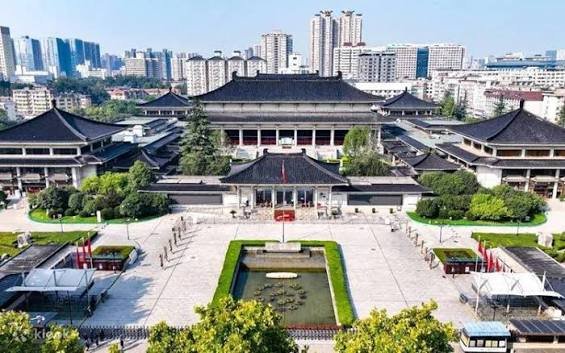
Shaanxi History Museum
If you want to understand the history behind Xi’an, the Shaanxi History Museum is one of the most valuable places to visit.
It helps connect the city’s sites with broader Chinese history.
Food I would recommend
Xi’an food is one of the biggest reasons to visit. It is bold, filling, wheat-based, and deeply connected with northern and northwestern Chinese food culture.
 Classic
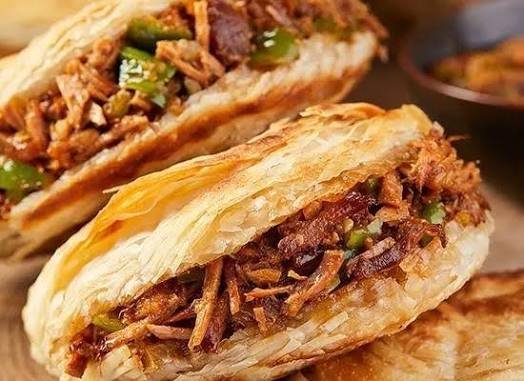
Roujiamo
肉夹馍 ròujiāmó is often described as a Chinese-style meat sandwich.
It is simple, flavorful, and one of Xi’an’s most famous snacks.
 Noodles
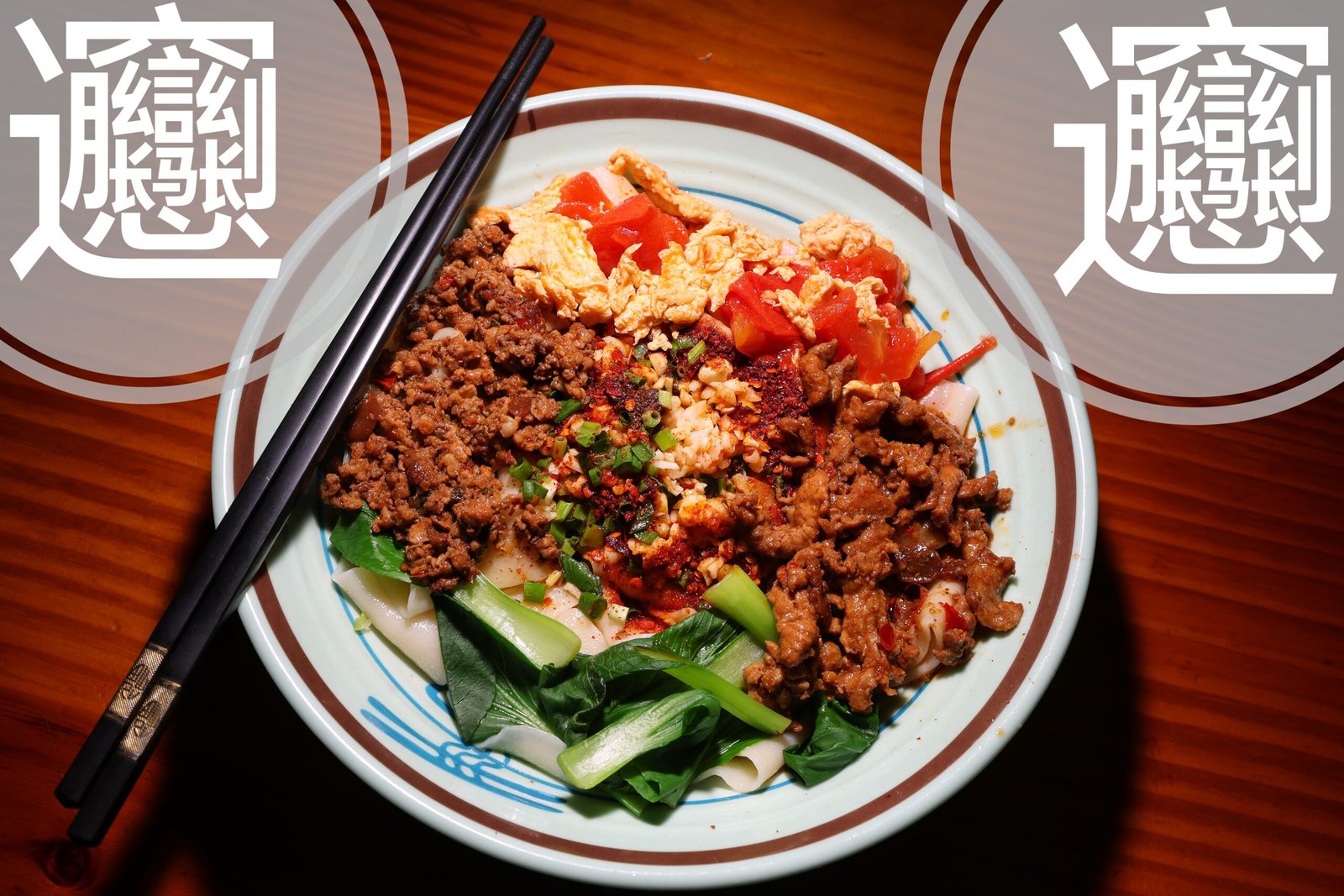
Biangbiang Noodles
Biangbiang 面 is famous for its wide hand-pulled noodles and strong flavor.
The character “biang” is also famous because it is extremely complex and often used as a fun cultural example.
Yangrou Paomo
羊肉泡馍 yángròu pàomó is a hearty lamb soup dish with pieces of flatbread.
It is a very local food experience and is especially connected with Xi’an’s Muslim food culture.
A simple 3-day first-time route
This route gives first-time visitors a balanced experience of Xi’an: archaeology, old city atmosphere, food, and cultural history.
Old city and local food
Bell Tower → Drum Tower → Muslim Quarter → Xi’an City Wall. This day helps you understand the old city layout and local food culture.
Terracotta Warriors and Qin history
Visit the Terracotta Warriors as a half-day or full-day trip. Leave enough time for transportation and do not rush the museum.
Tang culture and museums
Shaanxi History Museum → Big Wild Goose Pagoda → Datang Everbright City area in the evening. This day connects ancient culture with modern tourism.
Useful cultural details to notice
Xi’an becomes more interesting when you notice how history, religion, trade, and local food culture meet in the same city.
From Qin to Tang
Xi’an is linked with several important historical periods. The Qin dynasty gives the city a sense of power, while Tang culture gives it imagination, openness, and cosmopolitan energy.
Wheat-based culture
Compared with southern rice-based food, Xi’an food is strongly connected with wheat: noodles, flatbread, buns, and hearty soups.
Hui Muslim culture
The Muslim Quarter helps visitors see cultural and religious diversity within China.
Ancient style, modern tourism
In some areas, Xi’an uses Tang-style architecture, lights, performances, and street scenes to create a modern version of ancient Chang’an.
Practical travel advice
Xi’an is easier to navigate than some huge Chinese cities, but good planning still makes the trip much smoother.
| Topic | Guide advice |
|---|---|
| Best travel style | Mix history with food. Do not make the trip only about museums and ruins. |
| Transportation | Use the metro and taxis inside the city. For the Terracotta Warriors, plan transportation separately because they are outside the center. |
| Walking | The city wall and old city areas involve walking or cycling. Wear comfortable shoes. |
| Booking | Check museum and attraction reservation rules in advance, especially for popular sites and holidays. |
| Weather | Spring and autumn are comfortable. Summer can be hot, and winter can be cold and dry. |
| Food | If you do not eat lamb, beef, or spicy food, check before ordering. Some local dishes are rich, oily, or strongly flavored. |
Useful Chinese words for Xi’an
- 西安 Xī’ān — Xi’an
- 长安 Cháng’ān — ancient name of Xi’an
- 兵马俑 bīngmǎyǒng — Terracotta Warriors
- 城墙 chéngqiáng — city wall
- 大雁塔 Dàyàntǎ — Big Wild Goose Pagoda
- 回民街 Huímín Jiē — Muslim Quarter
- 肉夹馍 ròujiāmó — Chinese-style meat sandwich
- 羊肉泡馍 yángròu pàomó — lamb soup with flatbread
- 丝绸之路 Sīchóu zhī Lù — Silk Road
Travel videos to watch
These videos can help you see the rhythm of Xi’an before reading or traveling. I selected public YouTube results with strong view counts and clear travel relevance.
The Chinese Silk Road: Xi’an, Lanzhou and Jiayuguan
Good for seeing Xi’an as the starting point of a wider Silk Road story.
48 Hours in Xi’an
A practical travel-style video for first-time visitors planning a short stay.
Xi’an: Gateway to the Ancient Silk Road
Useful for connecting the city’s landmarks with history and everyday travel scenes.
Video selection note: ranking was based on public YouTube search metadata available during review, especially view counts and topic relevance.
Final guide note
Xi’an is a city where ancient China feels close. It is not only a place to see old objects; it is a place to understand power, trade, religion, food, and the long memory of Chinese civilization.
If you visit the Terracotta Warriors, walk along the city wall, eat local noodles, explore the Muslim Quarter, and stand near the Big Wild Goose Pagoda, you will already have touched several important sides of Xi’an.