
Chinese Culture
Traditional Chinese Architecture and Homes
Traditional Chinese architecture is not only about buildings. It reflects ideas about family, hierarchy, harmony, nature, space, direction, and social order.
For Chinese learners, architecture helps explain why courtyards, gates, gardens, ancestral halls, and symmetrical layouts carry deep cultural meaning.
Teaching Visual
Four Ways to Understand Chinese Architecture
Traditional buildings become easier to understand when you look at them through these four ideas.
Courtyard
The courtyard connects rooms, family members, daily life, and shared space.
Axis
Many important buildings use central axis, symmetry, and clear order.
Hierarchy
Space can show respect, seniority, family roles, and social relationships.
Nature
Gardens use water, rocks, plants, paths, and views to create harmony.
1. Space Reflects Family and Order
In many traditional Chinese homes, space is organized carefully. The layout can show family hierarchy, respect for elders, and the difference between public and private areas.
A home is a social structure
院子 yuànzi means courtyard. In many traditional homes, the courtyard is the heart of family life. It connects rooms, people, light, air, and daily activities.
2. Siheyuan: The Courtyard Home
Siheyuan is one of the most famous traditional residential forms in northern China, especially Beijing.
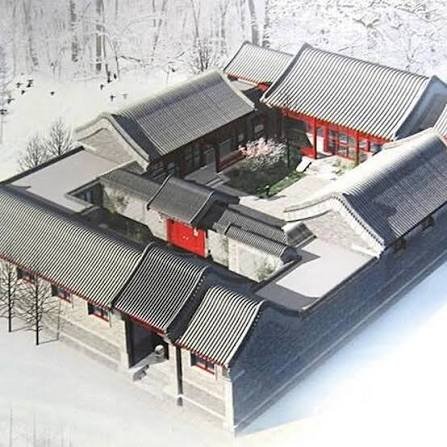
四合院
四合院 sìhéyuàn literally means “four-sided enclosed courtyard.”
“四” means four, “合” means joining together, and “院” means courtyard.
Rooms around a courtyard
Traditional siheyuan homes have buildings on four sides with an open courtyard in the middle.
This creates an inward-facing family space.
Family hierarchy
In traditional layouts, room placement could reflect seniority and family status.
Elders and important family members often occupied more respected positions.
3. Hutongs and Beijing Local Life
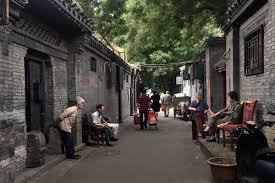
Hutongs are narrow lanes or alleys, especially famous in Beijing. They are closely connected with old urban life and neighborhood culture.
胡同
胡同 hútòng means alley or lane. In Beijing, hutongs connect courtyard homes and create neighborhood communities.
Hutongs are not just roads. They are spaces of memory, local identity, and daily interaction.
Neighbor culture
In old neighborhoods, people may know their neighbors, chat outside, buy food nearby, and share a strong sense of local life.
Today, many hutongs are also connected with tourism, cafés, and cultural preservation.
4. Central Axis and Symmetry
Many important Chinese buildings use symmetry and central axis. This creates a sense of order, balance, and authority.
中轴线
中轴线 zhōngzhóuxiàn means central axis. Important buildings may be arranged along a central line.
对称
对称 duìchèn means symmetry. Symmetry creates balance, dignity, and visual order.
Order and power
Palaces, temples, and official buildings often use strict layout to express hierarchy and seriousness.
5. Direction and “Facing South”
In traditional Chinese architecture, direction matters. A common ideal is 坐北朝南 zuò běi cháo nán — sitting in the north and facing south.
坐北朝南
This means a building is positioned with its back to the north and front facing south.
In many areas of China, this orientation can bring better sunlight and comfort.
More than sunlight
Direction can also carry symbolic meaning, especially in formal, ritual, or traditional planning.
It shows how practical needs and cultural ideas often overlap in architecture.
6. Chinese Gardens: Nature in Miniature
Traditional Chinese gardens are designed to create harmony between architecture, nature, movement, and poetic imagination.
水
水 shuǐ, water, brings movement, reflection, softness, and life to a garden.
假山
假山 jiǎshān means artificial rockery. It creates mountain-like scenery in a small space.
步移景异
A Chinese garden often reveals different views as you walk. The scenery changes step by step.
亭子
亭子 tíngzi, pavilions, are places to rest, view scenery, write poetry, or enjoy tea.
7. Gates, Walls, and Thresholds
Gates and walls are important in traditional Chinese spaces. They separate inside and outside, public and private, ordinary space and meaningful space.
大门
大门 dàmén, the main gate, is not only an entrance. It can show status, protection, and family identity.
墙
墙 qiáng, walls, create privacy and enclosure. Traditional homes often look inward rather than outward.
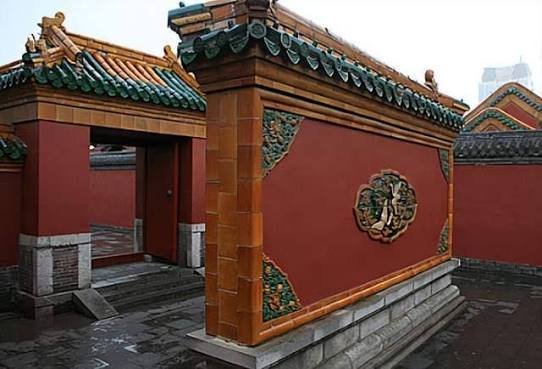
影壁
影壁 yǐngbì is a screen wall near the entrance. It can block direct views and create a sense of transition.
8. Ancestral Halls and Family Memory
Traditional architecture often connects family with ancestry. In some regions, ancestral halls are important places for remembering ancestors and holding family or clan activities.
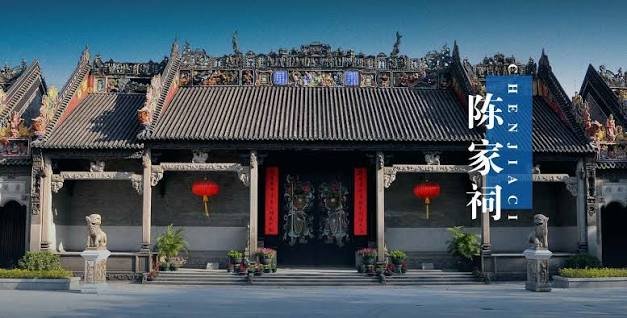
祠堂
祠堂 cítáng means ancestral hall. It is connected with family history, ancestor worship, and clan identity.
Family continuity
Ancestral halls show how architecture can preserve family memory and connect generations.
They also reflect the importance of family lineage in traditional culture.
9. Common Traditional Architectural Elements
These elements often appear in traditional buildings, gardens, streets, and cultural sites.
| Element | Chinese | Meaning | Culture note |
|---|---|---|---|
| Courtyard | 院子 yuànzi | Open space inside a home or building group. | Connects family life, light, air, and shared daily activities. |
| Main gate | 大门 dàmén | Main entrance. | Can show status, protection, and household identity. |
| Pavilion | 亭子 tíngzi | Open structure for rest or viewing scenery. | Common in gardens and scenic areas. |
| Corridor | 走廊 zǒuláng | Covered walkway. | Connects buildings and frames garden views. |
| Rockery | 假山 jiǎshān | Artificial mountain rocks. | Creates mountain scenery in a small garden. |
| Ancestral hall | 祠堂 cítáng | Place for honoring ancestors. | Reflects family lineage and memory. |
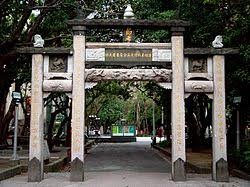
| Archway | 牌坊 páifāng | Traditional memorial archway. | Often marks streets, temples, villages, or places of honor. |
| Screen wall | 影壁 yǐngbì | Wall near entrance. | Blocks direct view and creates transition into private space. |
10. What This Means for Chinese Learners
Traditional architecture helps learners understand Chinese values in a visual way: family, order, hierarchy, privacy, harmony with nature, and respect for ancestors.
Learn place words
Words like 院子, 大门, 胡同, 亭子, 花园, and 房子 are useful for travel, daily conversation, and picture description.
Read space culturally
Traditional buildings show how Chinese culture thinks about family order, respect, and the relationship between inside and outside.
Understand cultural sites
When visiting Beijing, Suzhou, Xi’an, Nanjing, or ancient towns, architecture becomes easier to understand when you know these ideas.
Useful Chinese Words
- 建筑 jiànzhù — architecture / building
- 传统建筑 chuántǒng jiànzhù — traditional architecture
- 房子 fángzi — house
- 院子 yuànzi — courtyard
- 四合院 sìhéyuàn — traditional courtyard home
- 胡同 hútòng — hutong / alley
- 大门 dàmén — main gate
- 墙 qiáng — wall
- 亭子 tíngzi — pavilion
- 花园 huāyuán — garden
- 假山 jiǎshān — rockery
- 走廊 zǒuláng — corridor
- 祠堂 cítáng — ancestral hall
- 牌坊 páifāng — traditional archway
- 坐北朝南 zuò běi cháo nán — facing south with the back to the north
Conclusion
Traditional Chinese architecture and homes reveal important cultural ideas: family order, respect for elders, privacy, harmony with nature, direction, symmetry, and memory.
For Chinese learners, architecture is a powerful way to see culture. Once you understand courtyards, hutongs, gardens, gates, and ancestral halls, you can better understand Chinese history, family life, and cultural spaces.