
Chinese Culture
Ethnic Groups and Languages in China
China is not culturally or linguistically uniform. It is a large country with many ethnic groups, regional cultures, dialects, and minority languages.
For Chinese learners, understanding this diversity helps explain why people in China may speak differently, eat differently, dress differently, and celebrate different local traditions.
Teaching Visual
Four Ways to Understand Diversity in China
This overview helps learners organize the idea of “Chinese culture” into clearer parts.
Ethnic Groups
56 officially recognized ethnic groups, each with different histories and traditions.
Languages
Mandarin, local dialects, and minority languages all shape daily communication.
Regions
Food, climate, geography, and history create strong regional identities.
Culture
Clothing, festivals, music, food, beliefs, and customs vary across communities.
1. China Has 56 Ethnic Groups
China officially recognizes 56 ethnic groups. The Han Chinese are the largest group, while the other 55 groups are often called ethnic minorities.
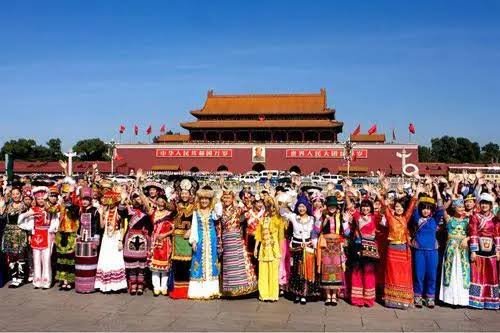
Han Chinese and Ethnic Minorities
The 汉族 Hànzú is the majority ethnic group in China. Other groups, such as the Zhuang, Hui, Manchu, Uyghur, Miao, Yi, Tujia, Tibetan, and Mongolian groups, have their own histories, customs, languages, and regional identities.
Han Chinese
Han Chinese culture has strongly shaped mainstream Chinese language, writing, festivals, names, food, family values, and education.
However, Han Chinese culture itself is also regionally diverse. A person from Guangdong, Sichuan, Beijing, and Shanghai may have very different local habits.
Ethnic minority cultures
Ethnic minority groups may have their own languages, clothing, music, dances, foods, festivals, religious traditions, and ways of life.
Their cultures are especially visible in regions such as Guangxi, Xinjiang, Tibet, Inner Mongolia, Yunnan, Guizhou, and Ningxia.
Culture changes by region
China’s cultural diversity is not only ethnic. Geography, climate, history, food, migration, and local dialects also shape regional identities.
2. Examples of Ethnic Minority Cultures
It is impossible to introduce all ethnic groups in one article, but these examples show how varied Chinese cultural life can be.
Teaching Visual
Ethnic Minority Cultures Are More Than Clothing
Clothing can be visually striking, but ethnic minority cultures also include languages, food traditions, religious practices, music, festivals, local histories, and ways of life.
Clothing
Traditional dress, embroidery, silver ornaments, and regional styles.
Food
Halal food, dairy traditions, rice culture, breads, lamb dishes, and local specialties.
Music
Folk songs, dance traditions, instruments, and festival performances.
Festivals
Local festivals connected with seasons, religion, harvests, and community identity.
| Group | Chinese | Often associated with | Culture note |
|---|---|---|---|
| Zhuang | 壮族 Zhuàngzú | Guangxi, folk songs, rice culture | The Zhuang are one of the largest ethnic minority groups in China. |
| Hui | 回族 Huízú | Islamic food customs, halal food | Hui communities are found in many parts of China and often have distinctive food traditions. |
| Manchu | 满族 Mǎnzú | Qing dynasty history, qipao-related clothing history | Manchu history had a major influence on late imperial China. |
| Uyghur | 维吾尔族 Wéiwú’ěrzú | Xinjiang, music, dance, bread, lamb dishes | Uyghur culture is strongly connected with Central Asian influences. |
| Tibetan | 藏族 Zàngzú | Tibet, Tibetan Buddhism, plateau culture | Tibetan culture has distinctive religious, artistic, and regional traditions. |
| Mongolian | 蒙古族 Měnggǔzú | Inner Mongolia, grasslands, horses, dairy foods | Mongolian culture is often associated with nomadic heritage and grassland life. |
| Miao | 苗族 Miáozú | Guizhou, silver jewelry, embroidery, festivals | Miao clothing and silver ornaments are visually rich and culturally important. |
| Yi | 彝族 Yízú | Yunnan, Sichuan, Torch Festival | The Torch Festival is one of the best-known Yi cultural celebrations. |
3. Mandarin, Chinese, and Putonghua
Foreign learners often ask: “Is Mandarin the same as Chinese?” The answer depends on how we use these words.
Chinese / 中文
中文 Zhōngwén usually refers to the Chinese language in general, especially written or learned Chinese.
Learners often say: 我学中文。Wǒ xué Zhōngwén. — I study Chinese.
Chinese language / 汉语
汉语 Hànyǔ means the language of the Han Chinese. It is commonly used in academic or formal contexts.
For example: 汉语水平考试 HSK means Chinese Proficiency Test.
Mandarin / Putonghua
普通话 Pǔtōnghuà is Standard Mandarin, the common spoken language used in education, media, government, and communication across regions.
Useful sentence:
我在学中文,也想练普通话。
Wǒ zài xué Zhōngwén, yě xiǎng liàn Pǔtōnghuà.
I am studying Chinese, and I also want to practice Mandarin.
4. Mandarin and Regional Dialects
Standard Mandarin helps people from different regions communicate. However, many Chinese people also speak a local dialect or regional language at home or in daily life.
Why Mandarin is important
Because China is large and linguistically diverse, Mandarin works as a shared language across regions.
- It is used in schools and universities.
- It is used in national media and official communication.
- It helps people from different regions understand each other.
- It is the main language most foreign learners study first.
Why dialects matter
Local dialects carry regional identity, family memory, humor, food culture, and local emotion.
- People may use dialects with family and local friends.
- Some dialects are not mutually understandable with Mandarin.
- Dialects often appear in comedy, music, short videos, and local media.
- Many people feel emotionally closer when speaking their hometown dialect.
5. Examples of Chinese Dialects and Regional Languages
The word “dialect” can be complicated. Some Chinese “dialects” are so different from Mandarin that speakers may not understand each other without learning them.
| Name | Chinese | Region | Culture note |
|---|---|---|---|
| Mandarin | 普通话 Pǔtōnghuà | Nationwide standard | The main language foreign learners usually study. |
| Cantonese | 粤语 / 广东话 Yuèyǔ / Guǎngdōnghuà | Guangdong, Hong Kong, Macau, overseas communities | Strongly connected with Cantonese pop culture, movies, food, and overseas Chinese communities. |
| Shanghainese | 上海话 Shànghǎihuà | Shanghai | A local language associated with Shanghai identity and urban culture. |
| Sichuanese Mandarin | 四川话 Sìchuānhuà | Sichuan, Chongqing | Often associated with humor, spicy food culture, and a relaxed local style. |
| Hokkien / Southern Min | 闽南语 Mǐnnányǔ | Southern Fujian, Taiwan, Southeast Asian communities | Important in Fujian, Taiwan, and many overseas Chinese communities. |
| Teochew | 潮汕话 Cháoshànhuà | Chaoshan area in Guangdong | Strongly connected with Chaoshan food, family culture, business networks, and overseas communities. |
| Hakka | 客家话 Kèjiāhuà | Guangdong, Fujian, Jiangxi, Taiwan, overseas communities | Associated with Hakka migration history and distinctive food traditions. |
6. Simplified and Traditional Chinese Characters
Chinese learners also meet two writing systems: simplified characters and traditional characters.
简体字
简体字 jiǎntǐzì are used in Mainland China and Singapore.
Most HSK materials and many international Chinese courses use simplified characters.
繁体字
繁体字 fántǐzì are used in Taiwan, Hong Kong, Macau, and many traditional cultural contexts.
They often preserve older character forms and visual structures.
Which should I learn?
If your goal is Mainland China, HSK, or practical communication with most Mandarin learners, start with simplified characters.
If your goal is Taiwan, Hong Kong, classical texts, or traditional calligraphy, traditional characters are also useful.
7. Common Terms Learners Should Know
These terms often appear in Chinese classes, textbooks, websites, and conversations about Chinese language and culture.
| Term | Pinyin | Meaning | Simple explanation |
|---|---|---|---|
| 中文 | Zhōngwén | Chinese | Common learner-friendly word for the Chinese language. |
| 汉语 | Hànyǔ | Chinese language | Often used in formal or academic contexts. |
| 普通话 | Pǔtōnghuà | Standard Mandarin | The common spoken language used across Mainland China. |
| 国语 | Guóyǔ | National language | Often used in Taiwan or older contexts to refer to Mandarin. |
| 华语 | Huáyǔ | Chinese language | Common in some overseas Chinese and Southeast Asian contexts. |
| 方言 | fāngyán | dialect / regional language | Local speech varieties, sometimes very different from Mandarin. |
| 简体字 | jiǎntǐzì | simplified characters | Used in Mainland China and Singapore. |
| 繁体字 | fántǐzì | traditional characters | Used in Taiwan, Hong Kong, Macau, and traditional contexts. |
8. What This Means for Chinese Learners
Understanding ethnic and linguistic diversity helps you make better learning choices and avoid oversimplifying Chinese culture.
Learn Mandarin first
For most learners, Standard Mandarin and simplified characters are the most practical starting point.
They are widely used in textbooks, HSK materials, schools, media, and everyday communication in Mainland China.
Notice regional differences
When you travel, watch Chinese videos, or talk with Chinese friends, pay attention to regional accents, food, habits, and local identities.
Avoid stereotypes
Do not assume every Chinese person has the same language background, food habits, religion, clothing style, or family tradition.
Useful Chinese Words
- 民族 mínzú — ethnic group / nationality
- 汉族 Hànzú — Han Chinese
- 少数民族 shǎoshù mínzú — ethnic minority groups
- 文化 wénhuà — culture
- 语言 yǔyán — language
- 中文 Zhōngwén — Chinese language
- 汉语 Hànyǔ — Chinese language
- 普通话 Pǔtōnghuà — Standard Mandarin
- 方言 fāngyán — dialect / regional language
- 粤语 Yuèyǔ — Cantonese
- 闽南语 Mǐnnányǔ — Hokkien / Southern Min
- 潮汕话 Cháoshànhuà — Teochew
- 简体字 jiǎntǐzì — simplified characters
- 繁体字 fántǐzì — traditional characters
Conclusion
China is not one single culture or one single way of speaking. It includes many ethnic groups, regional identities, dialects, minority languages, and writing traditions.
For Chinese learners, Mandarin is the best practical starting point. But understanding China’s diversity will help you communicate with more cultural awareness, curiosity, and respect.